Gears Pattern: Industrial Graphics for Crafts & Selling
The first time I opened the Gears Pattern file, I was setting up a new product line for my Etsy shop focused on rugged, masculine designs. I had been searching for a graphic design asset that could carry a mechanical aesthetic without feeling cold or generic. What I found in this gear-based illustration was a balance of structure and style. The lines felt deliberate, the spacing clean, and the overall mood landed somewhere between industrial chic and utilitarian bold. For anyone selling digital products in the Graphics and Crafts space, this is the kind of asset that signals professionalism before a customer even reads your listing copy.
This pattern is not trying to be cute or whimsical. It speaks to buyers who appreciate precision—mechanics, engineers, DIY enthusiasts, automotive lovers, or anyone building a brand around strength and reliability. That niche appeal is exactly what makes it valuable for a targeted product collection. When you serve a specific audience with consistent visual language, your shop builds trust faster.
Visual Personality and the Right Market Fit
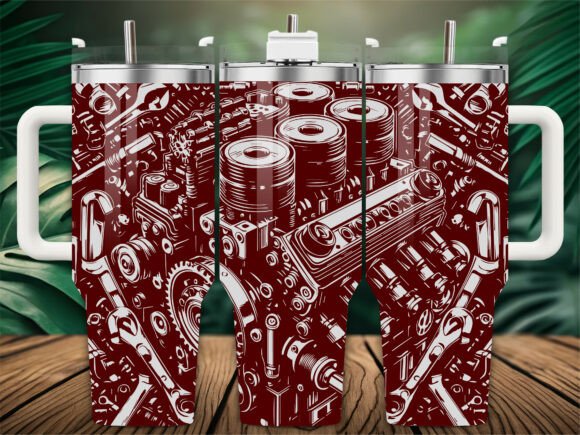
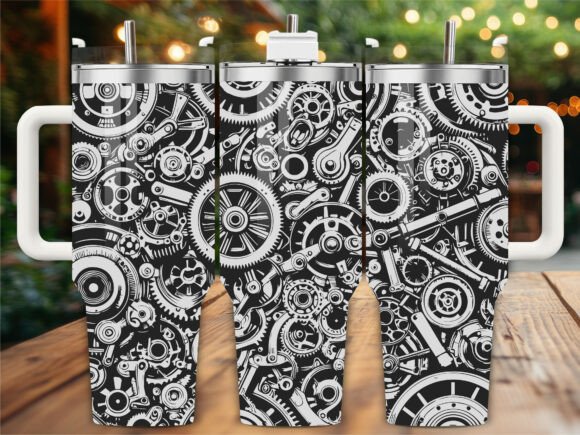
Gears Pattern carries a bold, structured visual personality. The repeating gear motif creates rhythm without clutter, and the line weight feels substantial enough for laser engraving or vinyl cutting. It reads as modern industrial rather than vintage steampunk, which broadens its commercial design potential. I immediately thought of tumbler wraps, tool kit packaging, workshop signage, and automotive-themed merchandise.
For print-on-demand sellers, this pattern works well on products aimed at a male audience or unisex utilitarian buyers. Think coffee mugs, tote bags, aprons, and notebook covers. The pattern also pairs naturally with bold sans serif fonts for a clean, no-nonsense look. If you are creating t-shirt designs or mug designs, the gear motif communicates durability and function, which resonates with buyers looking for gifts for mechanics, engineers, or hobbyists.
The Quencher H2.0 Tumbler Wrap Laser SVG concept embedded in this pattern is particularly smart. A full wrap design for 40oz Stanley-style tumblers is a high-demand product category right now. The gear pattern wraps around the tumbler in a way that feels continuous and intentional. I tested it on a mockup for a 40oz tumbler and the alignment held up well across the curved surface. That kind of ready-to-use structure saves hours of manual adjustment.
Real-World Testing Before the First Listing
When I evaluated Gears Pattern for my own shop, I ran it through a standard pre-listing test. I opened the SVG design in my cutting software to check the path quality. The nodes were clean, no stray points, and the gear shapes closed properly. That matters for Cricut projects and Silhouette cuts where open paths can ruin a weeded transfer. I also tested the PNG design on both white and dark backgrounds. On white, the pattern stayed crisp and readable. On dark, the contrast held up well as long as I used a light-colored version of the file.
I then dropped the pattern into a product mockup for a lid insert and a side panel sticker. The scale felt balanced at full size and at 70% reduction. I also tested it as a small accent element on a sticker sheet. At very small sizes—under 1 inch—the gear teeth started to lose definition, which is common with detailed mechanical patterns. So if you are building sticker design packs or planner stickers, use the pattern for larger focal elements rather than micro details.
One thing that stood out during testing was the full wrap design flexibility. The pattern repeats in a way that allows seamless wrapping around cylindrical products like tumblers, water bottles, and candle jars. That is a huge time-saver for sellers who produce multiple product variants. You do not need to manually tile or clone the pattern; it flows naturally edge to edge.
Where Gears Pattern Shines in a Product Line
This graphic design asset performs best in product categories where mechanical aesthetics add perceived value. I have found it especially effective for:
- Laser engraved tumblers and drinkware – the line detail responds well to laser etching, producing clean, dark burn marks on stainless steel
- Printable wall art – a gear pattern poster in a workshop or garage setting sells well as a digital download
- Packaging design – small business owners selling tools, hardware, or automotive accessories can use this pattern for branded boxes and inserts
- Canva templates – the pattern works as a background element in social media graphics, YouTube thumbnails, or brand identity templates for mechanical or engineering businesses
- Sublimation designs – on polyester blends, the gear motif transfers cleanly on mouse pads, coasters, and phone cases
- Product mockups – using the pattern in your listing images gives your shop a cohesive, professional feel that builds customer trust
When I created a bundle around this pattern, I included a tumbler wrap SVG, a sublimation PNG, a printable wall art file, and a social media template set. That kind of design bundle increases average order value because buyers get multiple use cases from one purchase. The pattern's visual consistency across formats makes bundling feel natural rather than forced.
Where Caution Matters in Production
No asset is perfect for every application, and Gears Pattern has limits worth noting before you publish a listing. As I mentioned earlier, small-scale applications lose legibility. If you are creating clip art packs or tiny journal stickers, the gear teeth become muddy below about 1.5 inches. I recommend keeping the pattern for medium to large surface areas.
On complex layouts where you combine multiple design elements, the pattern can compete for attention. If your product includes bold typography or multiple illustrations, consider using Gears Pattern as a subtle background rather than the hero element. That preserves visual hierarchy and keeps the overall design readable.
Another consideration is cutting line precision for Cricut or Silhouette users. The SVG cut quality is excellent for straight edges and large curves, but the fine gear teeth require a sharp blade and stable mat. If your customers are less experienced with vinyl cutting, they may struggle with weeding tiny gear gaps. I always include a care note in my product description advising users to check their blade sharpness and cut settings before running the file.
For dark backgrounds, test the contrast with your specific substrate. On black stainless steel tumblers, a light-colored laser engrave may not pop as strongly as on raw steel. Similarly, sublimation on dark polyester requires a white base layer to maintain visibility. These are small adjustments, but they prevent negative reviews and return requests.
Practical Seller Notes for Packaging and Presentation
After testing Gears Pattern across multiple products, I developed a checklist for listing preparation. If you are adding this asset to your shop, consider these steps:
- Test on real mockups – do not rely on generic templates. Drop the pattern onto a curved tumbler mockup and a flat wall art mockup to see how it scales
- Preview as a marketplace thumbnail – shrink your main listing image to thumbnail size. Can you still read the gear detail? If not, adjust the crop or use a bolder version
- Check white and dark background versions – offer both color variants so customers can choose the contrast that works for their project
- Verify PNG transparency – ensure the background is truly transparent in editing software. Residual white pixels around gear edges can ruin a print
- Inspect SVG cut quality – open the file in your cutting software and simulate a cut. Look for open paths, overlapping nodes, or thin bridges that might snap during weeding
- Confirm commercial licensing – if you are selling finished products on Etsy, Amazon, or your own site, make sure the license allows commercial use. Most digital assets require a separate commercial license for print-on-demand or mass production
- Pair with complementary font styles – I tested Gears Pattern with a heavy sans serif, a clean serif, a casual handwritten font, and a decorative display font. The pattern paired best with bold sans serif for a modern industrial look, but a subtle serif added a refined feel for upscale packaging
Organizing your files clearly for customers also reduces support messages. I name folders with the asset name, format type, and color variant. For this pattern, I included a README file with tips on scaling, cutting, and printing. That small step builds trust and positions your shop as professional and customer-focused.
Building a Cohesive Collection with Gears Pattern
One of the strongest uses for a graphic design asset like this is creating a cohesive product collection. When I launched a small small business branding bundle around Gears Pattern, I included a logo template, social media graphics, packaging design, and a digital paper pack. The pattern tied each element together visually, and the collection performed better than individual listings because customers saw a complete brand identity solution.
For creative entrepreneurs selling on creative marketplace platforms, a pattern-based collection signals that you understand brand identity and visual hierarchy. Buyers looking for design assets for their own shops appreciate when a pattern can be used across multiple touch points. That is the difference between selling a single file and building a repeat customer base.
I also used the pattern to create social media graphics for my own promotional posts. A consistent visual theme across Instagram, Pinterest, and Etsy listing images reinforces your shop's identity. Over time, that consistency improves click-through rates and customer recall.
Gears Pattern is not a trend-driven design. It is a steady, reliable commercial design asset that serves a specific market well. For sellers building an industrial, mechanical, or utilitarian product line, this pattern offers structure, versatility, and professional polish. The tumbler laser file and full wrap design features make it particularly valuable for drinkware sellers, but the applications extend far beyond tumblers.
If you are preparing a new collection for your shop, test this pattern against your product lineup. Run it through mockups, check the cut and print quality, and think about how it fits into a broader brand story. When you find the right niche, a pattern like this becomes more than a file—it becomes a foundation for your next best-selling collection.