Gear Engine: Elevating Small Business Graphics and Crafts
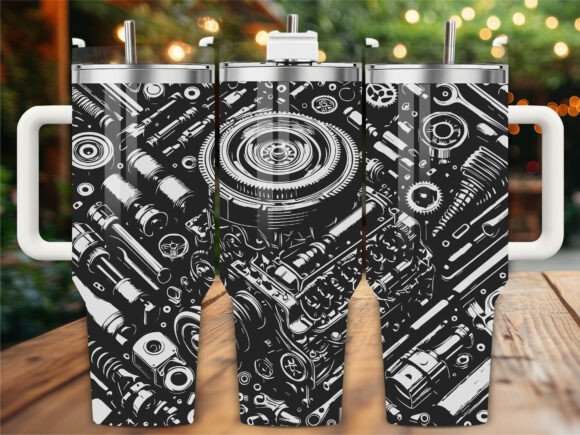
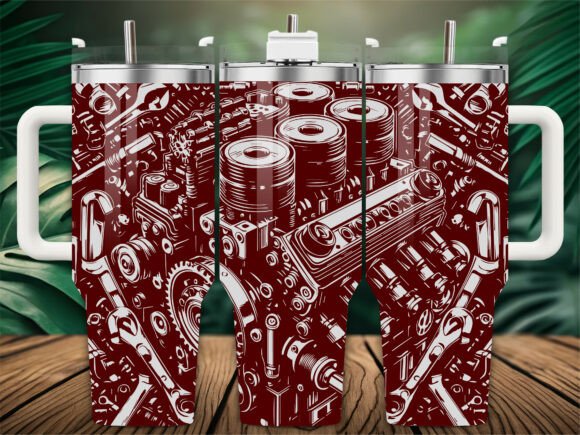
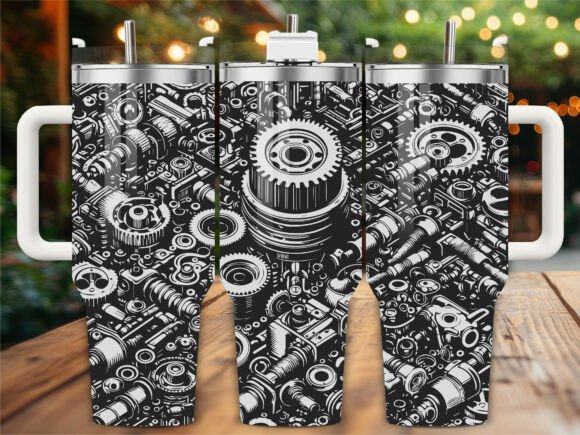
As a brand designer who works regularly with local businesses, I review a lot of graphic design assets before recommending them to clients. When I first opened the Gear Engine SVG set, I was immediately struck by its industrial character. The gear motifs and mechanical details create a mood that is both robust and refined—perfect for businesses that want to communicate strength, craftsmanship, and a hands-on approach. This is not a delicate or overly decorative asset; it carries weight and purpose. The Quencher H2.0 Tumbler Wrap Laser SVG is specifically designed for 40oz Stanley-style tumblers, but the design language extends far beyond a single product. Whether you are branding a local roastery, a handmade business like a soap studio, or a boutique hardware store, Gear Engine brings a distinct mechanical personality that can anchor your visual identity.
An Industrial Edge That Feels Both Robust and Approachable
The first thing I noticed about Gear Engine is its balance. The gear shapes are bold but not aggressive. The lines are clean, and the layout allows for both centered and offset compositions. This makes it suitable for a range of applications—from product labels to social media graphics. The mood is decidedly industrial, but there is a warmth to the design that keeps it from feeling cold or corporate. For a small business, this translates to a brand personality that suggests durability, tradition, and quality. It fits naturally with coffee shops, butcher shops, bakeries, breweries, woodworking studios, and outdoor gear brands. It would also work well for a food business that wants to emphasize farm-to-table values or handmade production methods. As a modern design asset, it bridges the gap between rugged authenticity and polished presentation.
Bringing Gear Engine Into a Local Coffee Brand Project
Let me walk through a real application. Imagine a local coffee roastery called Iron Bridge Coffee. They roast in small batches, source ethically, and package their beans in kraft bags with minimal labeling. The owner wants a brand identity that reflects the industrial heritage of their city and the craftsmanship of their product. Using Gear Engine as a central graphic element, I can create a logo design that incorporates a gear motif framing the company name. The same motif becomes a repeating pattern on their packaging design, a decorative accent on hang tags, and a consistent visual across their entire product line. The SVG file is easy to edit in vector software, so I can adjust scale and rotation to fit different bag sizes without losing quality.
For their 40oz tumbler line—which they sell as a reusable travel mug—the laser engraving file is ready to go. The full wrap design fits perfectly around the tumbler, creating a seamless brand moment every time a customer takes their coffee on the road. This is where Gear Engine truly shines as a digital product that supports both physical and digital branding needs. The same vector files can be exported as PNG design elements for social media, ensuring consistency across every touchpoint.
From Labels to Social Feeds — Where Gear Engine Shines
Gear Engine is more than a single graphic; it is a design system that can be adapted across your entire brand presence. Here is where it delivers the most value for local business branding and packaging design:
- Product labels and packaging accents — The gear motif works beautifully as a background texture, a border element, or a focal point on product labels. It adds a tactile, crafted feel that customers associate with quality. For a handmade business like a candle studio or a soap company, this kind of printable design elevates everyday packaging into something memorable.
- Hang tags and thank-you cards — Small touches like a gear-embossed hang tag or a thank-you card with a gear watermark reinforce the brand story and create a cohesive unboxing experience.
- Menu graphics and price lists — For a coffee shop or a food business, the gear design can frame menu items or pricing information, adding visual interest without distracting from the content. This works especially well in editorial design contexts like printed menus or digital boards.
- Social media graphics and website banners — The SVG file scales perfectly for digital use. I have used it as a profile frame, a story highlight icon, and a repeating pattern for Instagram posts. For marketing visuals, consistency across digital and print builds trust.
- Promotional ads and product mockups — When creating ads for seasonal campaigns, the gear motif provides a consistent visual anchor that customers begin to recognize. Testing it in a product mockup before committing to a print run is always wise.
- Printable inserts and seasonal packaging — For limited-edition products, the gear design can be printed on inserts or wrapping paper, adding a cohesive brand layer without requiring a full packaging redesign.
The Business Impact of a Well-Chosen Design Asset
When you use a design asset like Gear Engine with intention, it does more than decorate—it builds your brand. For small business owners and creative entrepreneurs, every visual choice affects how customers perceive your professionalism. Here are the specific ways Gear Engine supports stronger business presentation:
- Stronger first impression — A well-designed label or social graphic catches the eye and communicates professionalism immediately. In a crowded creative marketplace, this matters.
- Better product recognition — Consistent use of a distinctive motif makes your products easy to spot on a shelf or in a feed. Customers begin to associate the gear shape with your brand.
- Clearer visual hierarchy — The gear shapes guide the eye naturally, making it easier for customers to find key information like product name or price. This is essential for packaging design where space is limited.
- More consistent brand identity — Using the same design element across packaging, digital media, and promotional materials creates a unified brand experience. This consistency is the hallmark of professional branding.
- Improved customer trust — Polished, intentional design signals that you care about quality and detail. Customers are more likely to trust a brand that looks professional across every touchpoint.
- More professional packaging — A gear-motif label on a kraft bag or a tumbler wrap elevates the entire product perception. For a handmade business, this can justify a higher price point.
- Stronger emotional connection — The industrial aesthetic evokes feelings of tradition, durability, and authenticity, which resonate with customers who value craftsmanship and local production.
Smart Placement vs. Overuse — Knowing Where Gear Engine Works Best
Gear Engine is versatile, but like any graphic design asset, it has optimal contexts. Understanding where it adds value and where it may distract is part of being a thoughtful commercial designer. Here is where it performs best:
- Product labels and packaging accents — especially on kraft, black, or neutral backgrounds where the gear shapes stand out and create contrast.
- Hero graphics on website banners or social media posts — where the motif can be the central visual and anchor the composition.
- Decorative brand elements on thank-you cards, inserts, and hang tags — these small touches reinforce the brand without overwhelming the main message.
- Promotional banners for seasonal campaigns or limited-edition releases — the gear motif adds a sense of occasion and craftsmanship.
- Product mockups for portfolio or listing images — showing the design in context helps potential buyers visualize the final result.
And here is where I recommend caution:
- Formal corporate branding — For a law firm or financial institution, the industrial style may feel out of place. Reserve Gear Engine for brands that align with its mechanical character.
- Very small labels — Gear details can become muddy below 1.5 inches. Always test the SVG at the final print size before committing to a production run.
- Crowded product packaging — If your label already contains a lot of text, ingredient information, or regulatory copy, adding a large gear motif may overwhelm the layout and reduce readability.
- Low-contrast backgrounds — Light gears on a white or cream background lose impact. Ensure sufficient contrast for the motif to read clearly, especially in print.
- Luxury minimalist brands — If your brand is built on simplicity and negative space, the decorative gear element may compete with that aesthetic rather than enhance it. Consider whether the motif aligns with your core visual hierarchy.
Testing Gear Engine Like a Pro: Designer Checklist
Before you commit Gear Engine to a production run for your small business branding or packaging design project, run through these practical checks. These steps separate a polished commercial design from a missed opportunity:
- Test it on real packaging mockups — A digital preview never tells the full story. Print the design on your actual label stock or engrave it on a tumbler sample. See how it feels in hand.
- Check black and white usage — The SVG should maintain clarity without color. If you are printing on a monochrome label or engraving in black, confirm that the gear shapes remain distinct and readable.
- Preview it on small labels — Scale the design down to your smallest packaging size and check that details are still sharp. For clipart-style elements, this is a common failure point.
- Test it with your brand colors — Import the SVG into your design software and apply your brand palette. The gear motifs should complement, not clash. This is especially important if you use the asset as a Canva template element.
- Compare it with competitor packaging — Place your mockup next to three competing products. Does your label stand out? Does the gear design feel like a natural part of your category or does it seem forced?
- Check print quality — If you are using a laser engraver or a commercial printer, run a test piece and inspect the fine lines and curves. Adjust if needed.
- Review the SVG editability — Confirm that the vector paths are clean and that you can adjust colors, scale, and rotation without breaking the design. This is critical for web design, editorial design, or any project that requires custom adaptation.
- Confirm commercial licensing — Before using Gear Engine for client work, product labels, or any for-profit application, verify that your license covers commercial use. This is essential for local business branding, physical product sales, and all commercial design work. A proper commercial license protects both you and your clients.
- Test it beside different font styles — The gear motif pairs well with sturdy sans-serif fonts like Industry or Montserrat, but also works with bold serifs like Clarendon. It can clash with delicate scripts or overly ornate display typefaces, so test a few combinations before finalizing your logo design or packaging layout.
Gear Engine is a strong addition to any small business branding toolkit. When used thoughtfully, it brings an industrial authenticity that customers can see and feel. Whether you are working on product labels, social media graphics, a full brand identity, or a seasonal campaign, this graphic design asset delivers the visual weight your business needs to stand out in a local market. As an illustration and SVG design resource, it supports both print and digital workflows with remarkable ease. From the first sketch to the final product mockup, Gear Engine earns its place in the working designer's toolbox.