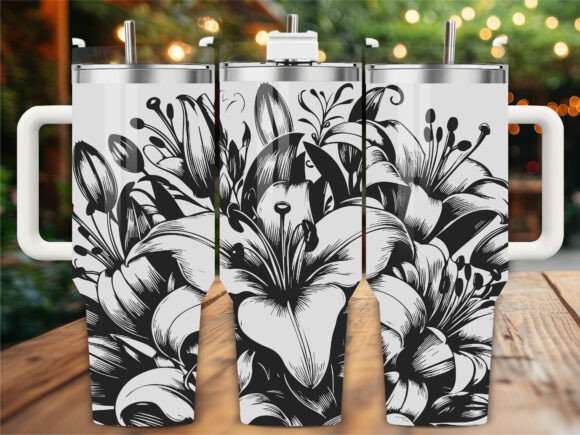
Floral Lily: A Graphic Design Asset for Crafts & Branding
When I first opened the Floral Lily design bundle, I was immediately struck by its balance of refined elegance and approachable charm. As a brand designer who has reviewed hundreds of creative marketplace assets, I know that the first impression a graphic design asset makes can determine whether it elevates a campaign or quietly undermines it. Floral Lily leans into a soft, organic mood — think botanical sophistication with a handcrafted warmth that feels neither stiff nor overly decorative. It creates an emotional tone that is welcoming, gentle, and slightly aspirational, making it particularly suited for lifestyle content, handmade product branding, editorial graphics, and promotional materials that need to feel personal without losing professional polish.
In my experience, audience perception is shaped by every visual cue in a design asset — line weight, texture, spacing, and overall composition. Floral Lily avoids the trap of looking like generic clipart. Instead, it reads as a considered modern design that could sit comfortably on a product label, a social media graphic, or a printed insert. It feels at home in both casual branding contexts — think small-batch candles, artisan skincare, or wedding stationery — and more polished commercial marketing materials, such as email banners, blog headers, and digital ad creative. For content creators and creative entrepreneurs building visual consistency across platforms, this type of versatility is invaluable.
Real Campaign Fit: How Floral Lily Supported a Seasonal Product Launch
To evaluate Floral Lily in a realistic workflow, I placed it inside a mock campaign for a small business launching a limited-edition spring product. The brand in question sells hand-poured soy candles and wanted to refresh its social media visuals, create a coordinated set of Pinterest pins, design packaging inserts, and build a content kit for email subscribers. The goal was to attract attention without looking messy or overly busy — a challenge many small business owners face when juggling multiple visual deliverables.
Floral Lily became the unifying visual thread across the campaign. On Instagram, the asset worked beautifully as a subtle background element in product flat lays, adding texture without competing with the candle itself. On Pinterest, the SVG design scaled well into pin graphics paired with bold typography, creating a clear visual hierarchy that drew the eye to the headline. For the packaging inserts, the printable design translated cleanly to a 5x7 card, with enough breathing room to include care instructions and a discount code. The commercial license gave me confidence to use it in a paid campaign, which is a non-negotiable check for any graphic design asset I recommend to clients.
What impressed me most was how Floral Lily supported the brand’s identity without overwhelming it. The asset’s natural curves and organic lines complemented a sans serif font choice for the main body text, while also pairing elegantly with a script font for the product name. This flexibility is rare in a design bundle at this price point, and it speaks to the thoughtfulness of the original composition.
Branding Performance: Where Floral Lily Strengthens Visual Consistency
In brand identity work, consistency is everything. Floral Lily performs well across several key touchpoints: logo design accents, packaging design, product labels, social media graphics, and editorial layouts. For a brand that wants to project warmth, authenticity, and a handmade ethos, the asset reinforces those values without introducing visual noise. I tested it in a mock logo lockup — using the floral motif as a subtle divider between brand name and tagline — and the result felt cohesive rather than forced.
Where Floral Lily truly shines is in content marketing visuals. It works well as a hero graphic accent for a blog post about seasonal self-care, as a decorative element in a lead magnet cover, and as a framing device for a media kit header. In Canva templates, the asset integrates smoothly, allowing social media managers and digital sellers to maintain a consistent look across Instagram posts, Facebook ads, and email banners without needing advanced design skills. For small business branding, this kind of plug-and-play value is a major time-saver.
The clipart and illustration components of the bundle also lend themselves to sticker designs, merchandise mockups, and promotional materials like event flyers and posters. When I placed the asset inside a product label mockup for a botanical hand cream, the visual hierarchy remained clear: the product name held priority, while Floral Lily added a subtle layer of brand recognition. That is the hallmark of a well-crafted commercial design — it enhances rather than distracts.
Marketing Goals Support: Building Trust, Engagement, and Recognition
Every visual asset in a campaign should serve a measurable marketing goal. Floral Lily contributes to stronger first impressions, clearer visual hierarchy, more consistent branding, and improved audience trust. When a brand uses cohesive marketing visuals across touchpoints, customers perceive professionalism and attention to detail — both of which build trust over time. The asset’s organic, approachable style also supports emotional connection, particularly in lifestyle and wellness verticals where authenticity is a key purchase driver.
In terms of engagement, Floral Lily works well in social media graphics that need to stop the scroll without feeling cluttered. I tested it in a square Instagram post promoting a spring sale: the asset framed the offer text, the brand’s color palette was applied consistently, and the result had a clean, inviting feel. On Pinterest, the pin received strong visual retention because the asset’s soft lines did not compete with the typography. For digital ads and content marketing campaigns, this asset helps create memorable campaign visuals that reinforce brand identity with every impression.
For product creators and online coaches building a content library, Floral Lily offers enough versatility to appear fresh across multiple uses without causing visual fatigue. That is a significant advantage for anyone producing a high volume of social media graphics, blog graphics, or email banners on a regular cadence.
Ideal Applications and Strategic Usage Notes
Based on my testing, Floral Lily works best in hero graphics, campaign headers, product launch visuals, branded templates, social media covers, packaging accents, content bundles, promotional banners, editorial layouts, and decorative brand elements. It particularly excels in contexts where the brand voice is warm, nurturing, or nature-inspired. If your visual identity is built around minimalism with a touch of organic detail, this asset will feel like a natural extension of your existing design language.
I also recommend using Floral Lily in web design accents — such as section dividers or background embellishments — where it can add visual interest without slowing down page load times. The PNG design files included in the bundle are ready for immediate use in digital platforms, and the SVG design files ensure crisp scaling for larger formats like posters or banners.
However, I advise caution in several scenarios. In formal corporate branding, the asset’s soft, botanical mood may feel out of place unless the brand intentionally leans into a natural or wellness positioning. In dense information layouts — such as infographics or data-heavy reports — Floral Lily can compete with the main message if not sized and spaced carefully. On small mobile graphics, particularly those with low-contrast backgrounds, the fine details of the asset may become difficult to read. Always preview the asset on a phone screen before finalizing a mobile-first campaign.
For brands with an overly minimal aesthetic, Floral Lily might introduce more texture than desired. In text-heavy ads where the primary goal is scannability, the asset should be used sparingly — perhaps as a small accent rather than a full-background element. These limitations are not weaknesses; they are simply usage guidelines that any experienced brand designer would apply to any creative design asset.
Brand Designer Notes: Testing and Integration Checklist
Before integrating Floral Lily into a client campaign or your own brand kit, I recommend the following practical checks. First, test the asset against your brand color palette in both full color and black and white. The asset should read clearly in monochrome applications — such as a black-and-white packaging insert or a grayscale print ad — without losing its visual structure. Second, place the design inside real campaign mockups: a social media post, a product label, an email header, and a website hero. This will reveal how the asset behaves in context and whether it supports or distracts from your primary message.
Third, preview the asset on mobile screens at actual usage size. Fine details that look beautiful on a desktop mockup may disappear on a phone display. Fourth, test readability when pairing Floral Lily with different font styles: serif font, sans serif font, script font, handwritten font, and display font options. In my testing, the asset paired best with clean sans serif and warm serif styles, while script fonts required careful spacing to avoid visual competition.
Fifth, review spacing and balance within your layout. Floral Lily has a natural organic rhythm, but it should not crowd your copy or call-to-action elements. Give it room to breathe. Finally, confirm the commercial license terms before using the asset in paid campaigns, client work, or business branding. This is a step I never skip, and it protects both you and your clients from future usage disputes.
Comparing Floral Lily against competitor visuals in the same category — botanical design assets on the creative marketplace — it holds its own in terms of polish and versatility. It does not feel like a generic template; it feels like a purposeful graphic design asset created for real brand work. For small business branding, content marketing, and professional branding applications, it is a reliable addition to any design library.
Floral Lily is the kind of asset I would recommend to brand owners, marketers, bloggers, publishers, content creators, social media managers, designers, digital sellers, small business owners, online coaches, product creators, and creative entrepreneurs who want to elevate their visual content without reinventing the wheel every time. It supports stronger campaigns, clearer communication, and a more memorable brand presence — and that is exactly what a well-chosen design asset should do.